
White Sands National Park, The Alkali Flat Trail
June 2021
Eerie and Mesmerizing, The Alkali Flat Trail
White Sands National Park is a world like no other, a 275-square-mile area of radiating gypsum. It felt more like an alien planet than a desert. While it was designated a National Monument in 1933, its 2019 redesignation as the 62nd National Park acknowledges its incredible value, from its specific white wildlife to 20,000-year-old Ice Age footprints.
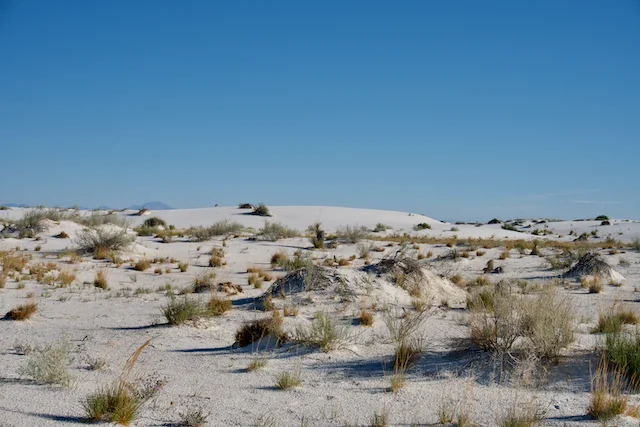
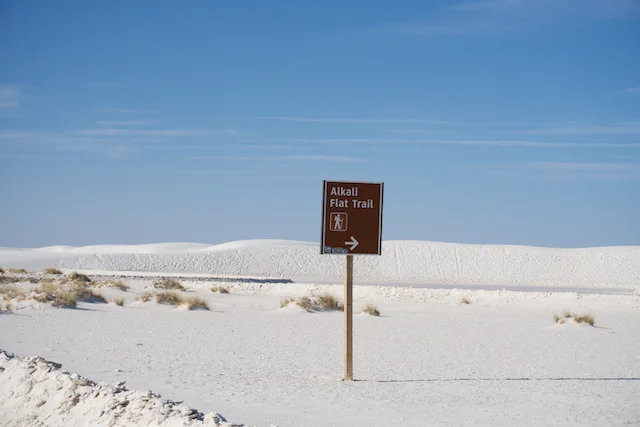
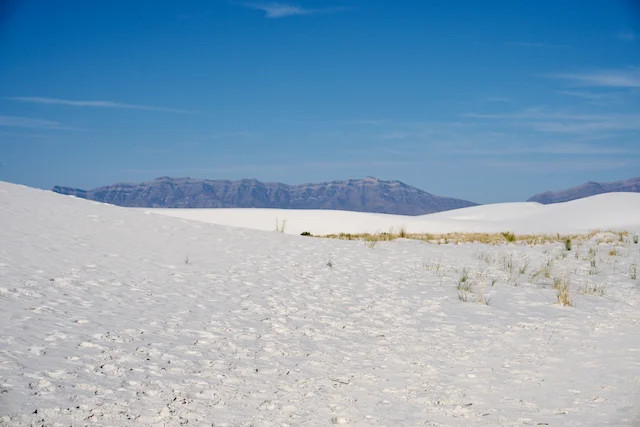

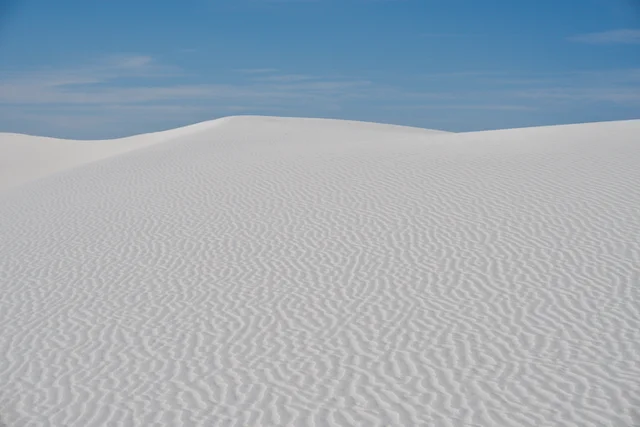
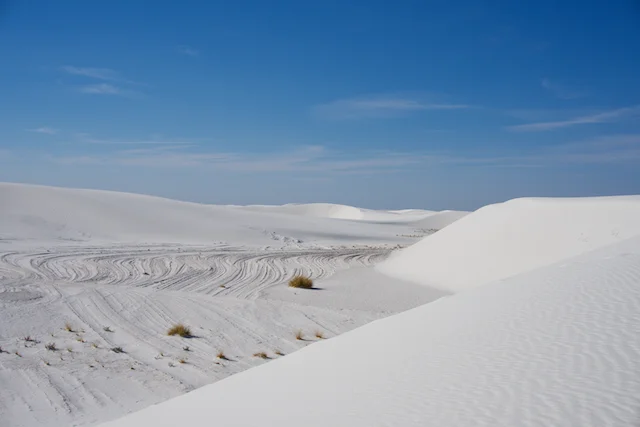
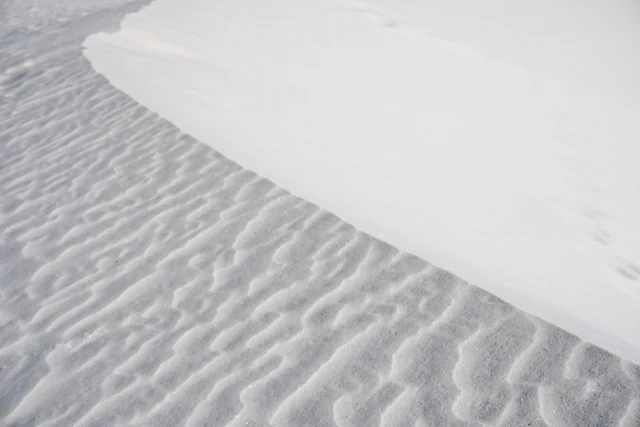
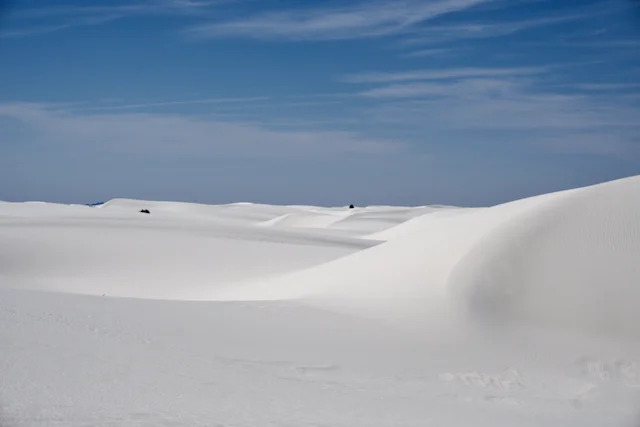
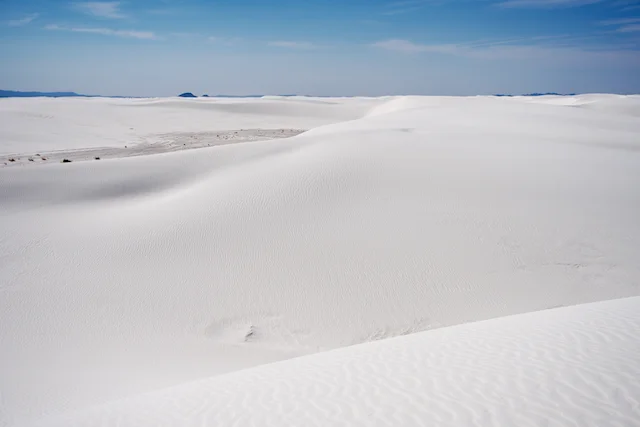
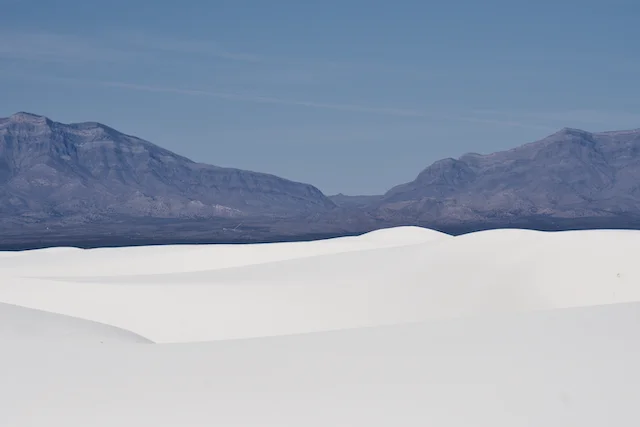
We were warned to be prepared when walking the Alkali Flat Trail, which, by the way, is not flat at all. It is the largest gypsum dunefield in the world. Gypsum is water-soluble, and it usually washes to the sea. Here, it is trapped in the Tularosa Basin, creating a blindingly white landscape that reflects nearly 100% of UV rays back. Foreign tourists who underestimated this trail have died from heat stroke. Although it is only five miles long, it is strenuous due to steep dunes, soft sand, and an unforgiving sun with no shade.
.
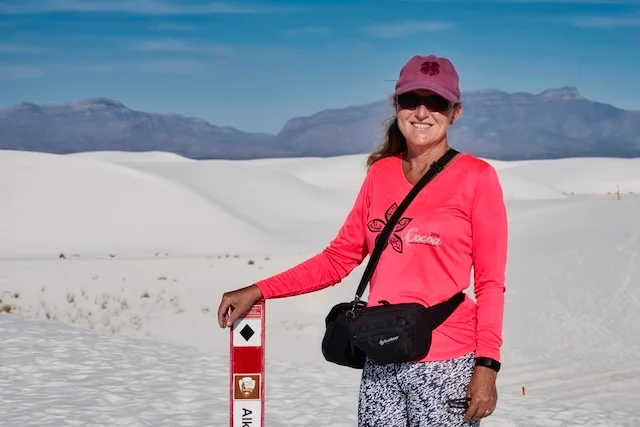
So I was a bit nervous, even though we came well-prepared. We started early, with temperatures around 75 °F. We brought plenty of water and food and made sure every inch of our skin was covered to prevent burning from the “mirror effect” of the sand. After every few steps forward on the soft, steep slope, we had to pause a bit.
For about 2.5 hours, we hiked through this unique white world, never leaving the markers out of our sight . Returning to the car, we were glad we had followed the safety instructions to the letter. It was an exhausting experience, but the silent, shifting, white beauty of these dunes was absolutely worthwhile. It had been eerie and mesmerizing at the same time!
Exploring White Sands National Park
Date
Wednesday, June 9, 2021
Distance
5.69 mi
Moving Time
2:14:03 hrs
WEATHER
75 °F to 93 °F,
light breeze